How Do You Convert kWh Back Into MWh After Checking an Energy Bill?
Learn how to convert residential electricity bills from kWh back to MWh to compare household usage against regional energy data
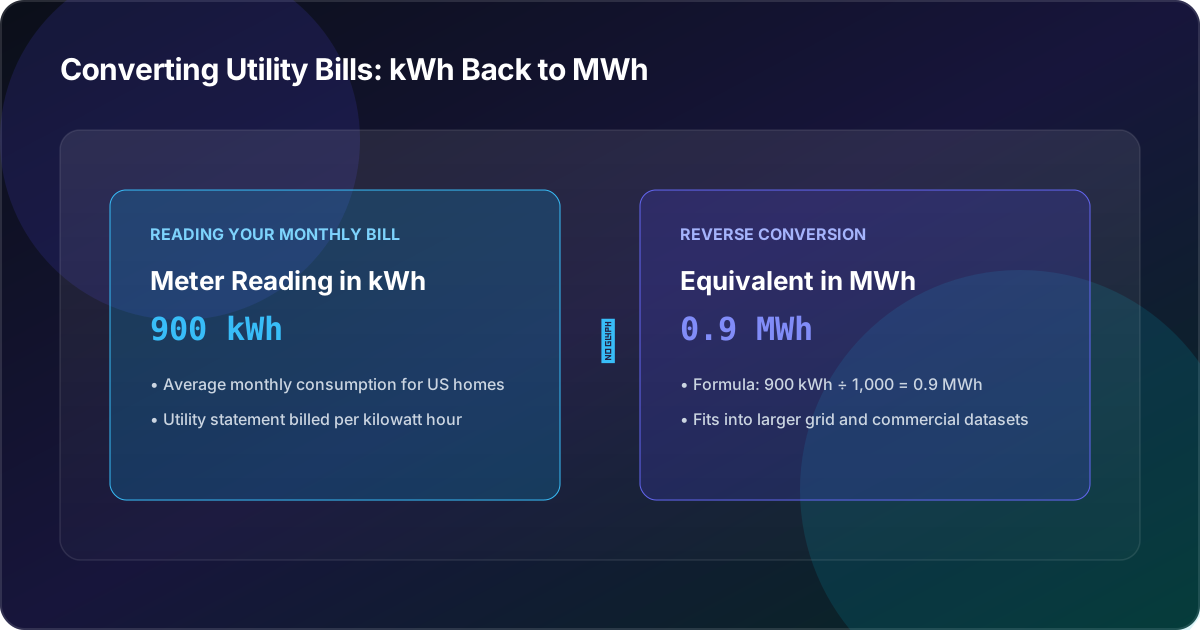
Most households receive their electricity usage in kWh, but sometimes you need to compare that figure to larger MWh data. Understanding how to convert kWh to MWh from electricity bill readings gives you a clearer picture of your household’s place within the bigger electricity system.
Finding the Energy Quantity on a Bill
Every electricity bill lists a total energy usage figure, almost always measured in kWh. This number reflects how much electricity your home consumed during the billing period.
Locating this figure is the first step before converting it into MWh for broader comparisons or record-keeping purposes.
Understanding Household kWh Consumption
Household electricity consumption typically ranges between 800 and 1,000 kWh per month for an average American home, based on data from the U.S. Energy Information Administration. This number can vary based on home size, climate, and appliance use.
Knowing your typical monthly range helps you recognize when a bill looks unusually high or low compared to your normal residential electricity patterns.
When Electricity Data Uses MWh Instead
Some reports, especially those covering entire neighborhoods or commercial buildings, use MWh instead of kWh. This shift usually happens once total energy use becomes large enough to benefit from a bigger unit.
Recognizing when electricity data uses MWh helps you understand why your personal bill looks different from larger community or business reports.
Converting a Bill’s kWh Total
To convert monthly kWh consumption to MWh, divide the kWh number by 1,000. For example, a bill showing 900 kWh converts to 0.9 MWh.
This reverse formula mirrors the original MWh to kWh process, just performed in the opposite direction using division instead of multiplication.
Reading Large Monthly Consumption Figures
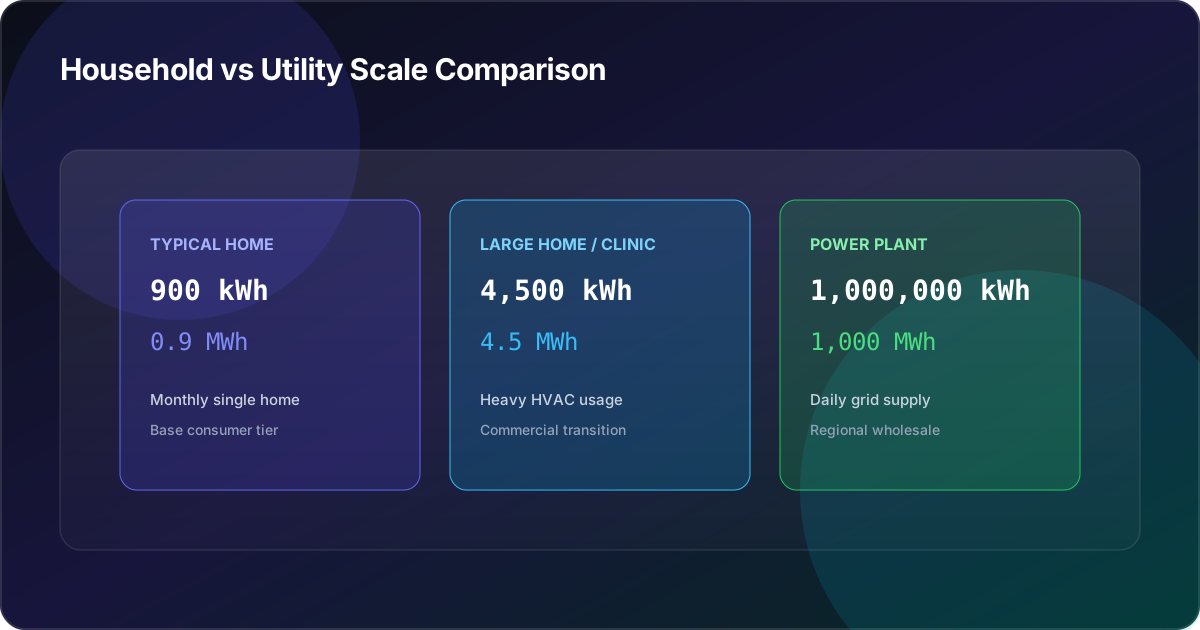
Larger households or small businesses might use more electricity, sometimes reaching several thousand kWh per month. Converting 4,500 kWh, for instance, results in 4.5 MWh.
This kind of large electricity bill reading helps larger consumers compare their own usage more easily against utility-scale benchmarks or industry averages.
| kWh Value | MWh Result |
|---|---|
| 900 | 0.9 |
| 2,000 | 2.0 |
| 4,500 | 4.5 |
Comparing Household and Utility-Scale Measurements
Once converted, it becomes much easier to compare your household energy data to larger utility figures. A single home’s 0.9 MWh looks tiny next to a power plant producing thousands of MWh daily.
This comparison highlights just how much electricity larger systems handle compared to individual homes, offering useful context for understanding the broader grid.
Checking Your Calculation in Reverse
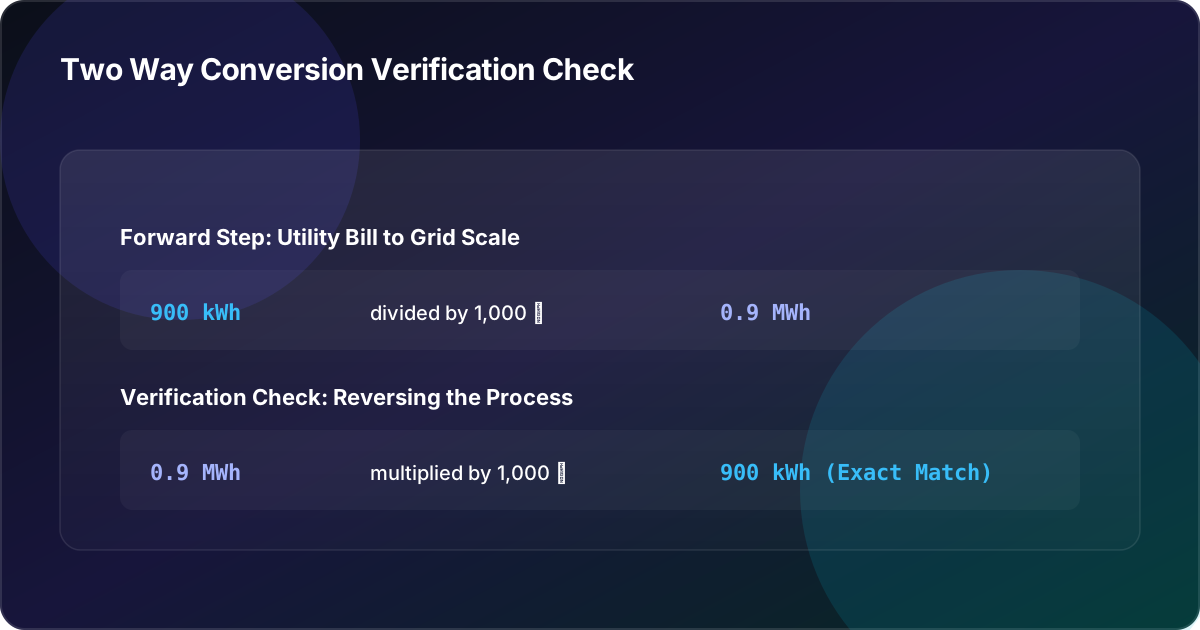
After converting kWh to MWh, you can verify your answer by reversing the process. Multiply your MWh result by 1,000, and it should match your original kWh figure exactly.
This simple reverse energy conversion check helps confirm accuracy and builds confidence in your calculation skills.
Understanding Energy Bill Units
Utility companies choose billing unit formats based on what makes sense for the average customer. Since kWh produces manageable numbers for homes, it remains the standard choice across residential electricity bills nationwide.
Understanding this reasoning helps explain why residential and commercial reports often use completely different unit scales.
Interpreting Converted Consumption Data
Once your bill has been converted into MWh, you can use that number for broader comparisons, research projects, or environmental tracking related to your energy consumption data over time.
This step is especially useful for anyone studying energy trends, comparing regional usage, or working on academic or professional research involving electricity data.
Conclusion
Converting kWh to MWh from a household electricity bill is a simple, reliable process that mirrors the standard MWh to kWh formula, just performed in reverse. By dividing your kWh total by 1,000, you gain a clearer, broader perspective on your electricity usage and how it compares to larger utility and industrial-scale energy figures. This small skill makes reading and interpreting energy data far less confusing overall.