Can an MWh-to-kWh Calculator Handle Decimal and Fractional Values?
See how to convert decimal and fractional MWh measurements to kWh while preserving numerical precision and avoiding early rounding mistakes
Not every energy figure comes as a clean, whole number. Many real-world readings include decimals, which raises a common question: can you accurately convert decimal MWh to kWh using the same simple formula? This guide walks through exactly how decimals and fractions fit into the standard conversion process.
Entering Decimal MWh Measurements
Decimal values are extremely common in electricity reporting, especially for smaller systems or precise measurements. Entering a decimal MWh conversion into a calculator works exactly the same as entering a whole number.
The formula does not change based on whether your number includes a decimal point. You still multiply by 1,000, regardless of the value’s precision.
Converting Half a Megawatt-Hour
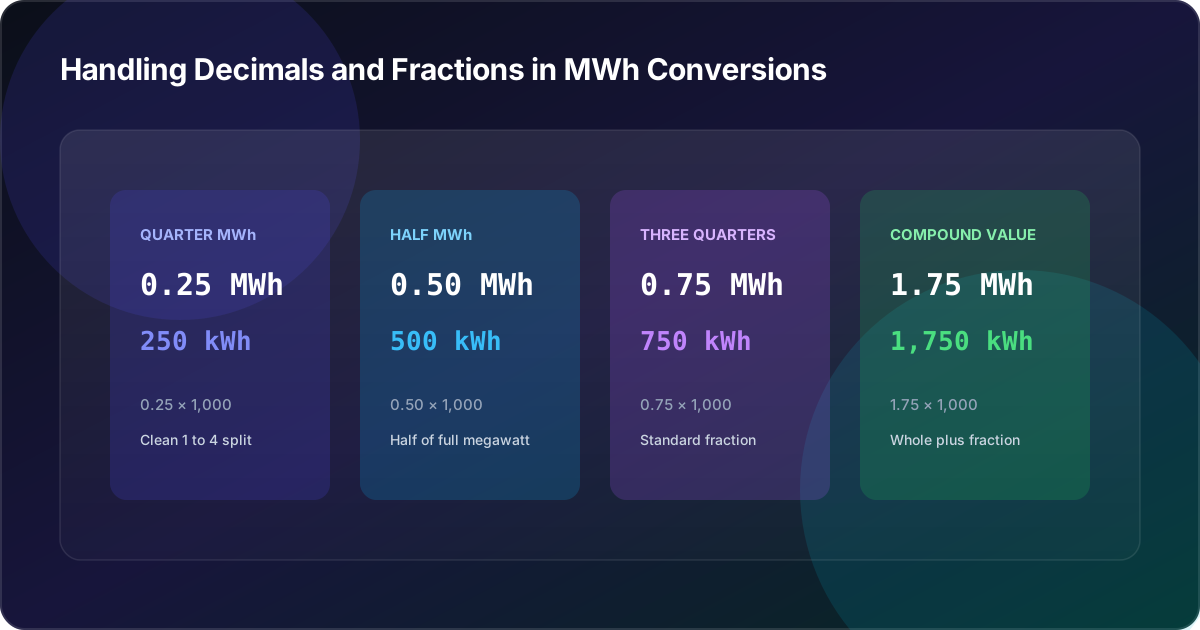
A great starting example is converting 0.5 MWh. To convert 0.5 MWh to kWh, multiply 0.5 by 1,000, which gives you exactly 500 kWh.
This example shows how decimals behave predictably within the formula, making half-values just as easy to calculate as full whole numbers.
Working With Small Fractions of MWh
Smaller fractional MWh values follow the same consistent pattern. Whether you are working with 0.1 MWh or 0.9 MWh, the multiplication process remains identical every time.
This consistency makes fractional electricity values far less intimidating once you understand that the underlying math never actually changes.
Calculating 0.25 MWh
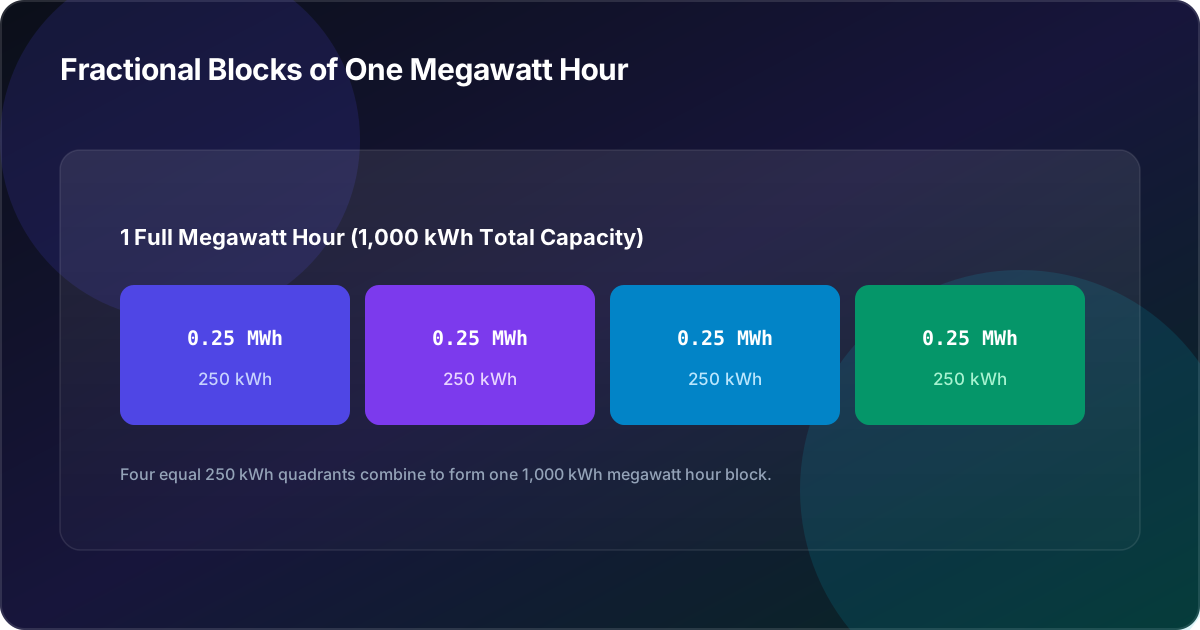
To convert 0.25 MWh to kWh, multiply 0.25 by 1,000. This gives you 250 kWh, a clean and easy-to-understand result.
This kind of calculation often appears when dealing with smaller commercial systems or precise engineering measurements that require exact decimal energy values.
Calculating 1.75 MWh
Larger decimals work the same way. To convert 1.75 MWh to kWh, multiply 1.75 by 1,000, resulting in 1,750 kWh.
This example demonstrates that combining whole numbers with decimals does not complicate the formula in any way, keeping the process simple and consistent.
| MWh Value | kWh Result |
|---|---|
| 0.25 | 250 |
| 0.5 | 500 |
| 0.75 | 750 |
| 1.75 | 1,750 |
Preserving Decimal Precision
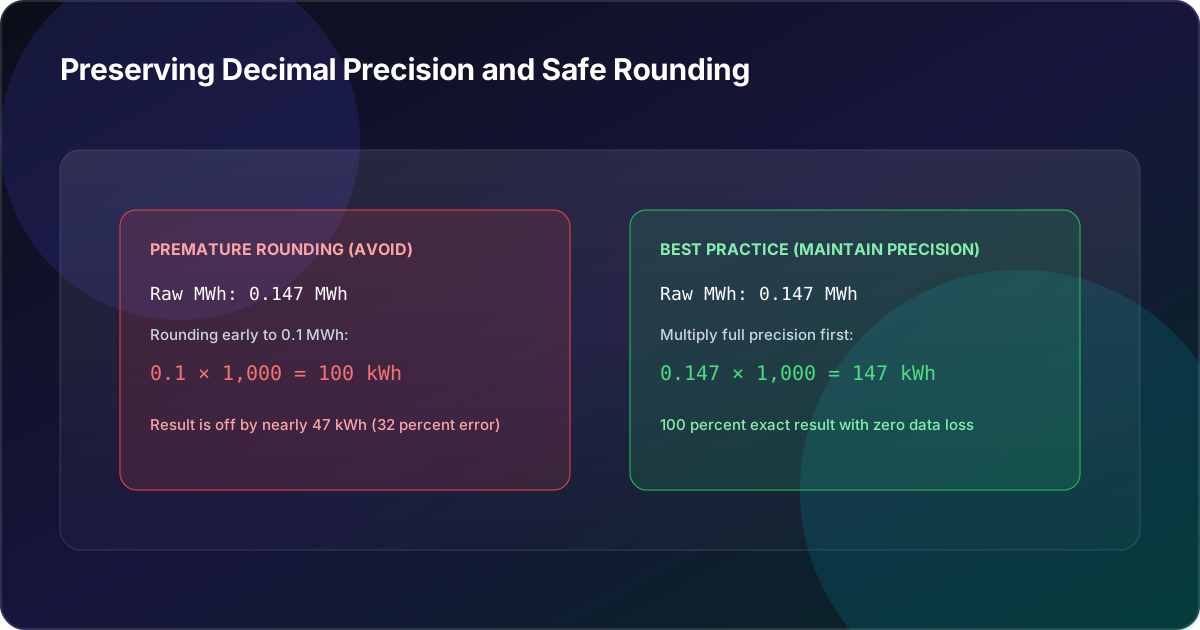
When working with energy precision, it is important not to round numbers too early in the process. Rounding before completing the full calculation can introduce small but meaningful errors.
Keeping full decimal precision until the final step ensures your kWh output remains as accurate as possible, especially for professional or scientific applications.
Rounding Converted Energy Values
Once your final calculation is complete, rounding may become appropriate depending on the context. Utility bills, for example, often round to the nearest whole kWh for simplicity.
Understanding proper conversion rounding helps maintain a balance between accuracy and readability, especially when sharing results with a general audience.
Avoiding Premature Rounding
A common mistake is rounding the original MWh number before multiplying. This can lead to inaccurate results, especially when working with very small energy fractions.
Always perform the full multiplication first, then round the final kWh number if needed. This approach protects the accuracy of your numerical precision throughout the process.
Verifying Calculator Results Manually
Even when using an online MWh to kWh calculator, it is smart to double-check results manually, especially for important reports or calculations. Multiplying decimals by 1,000 is simple enough to verify quickly by hand.
This habit builds confidence in your results and helps you catch any accidental calculator errors before they cause bigger problems later on.
Conclusion
Decimal and fractional values do not complicate the MWh to kWh calculator for decimals process at all. The same reliable formula applies whether your number is a whole figure or includes several decimal places. By keeping precision intact and rounding only at the end, you can trust your precise MWh conversion results every single time, whether you are working with small fractions or larger decimal values.