Why Does 1,000 Matter When Changing MWh Into kWh?
Discover why the number 1000 is the foundation of MWh to kWh conversions based on the metric prefix definitions of kilo and mega
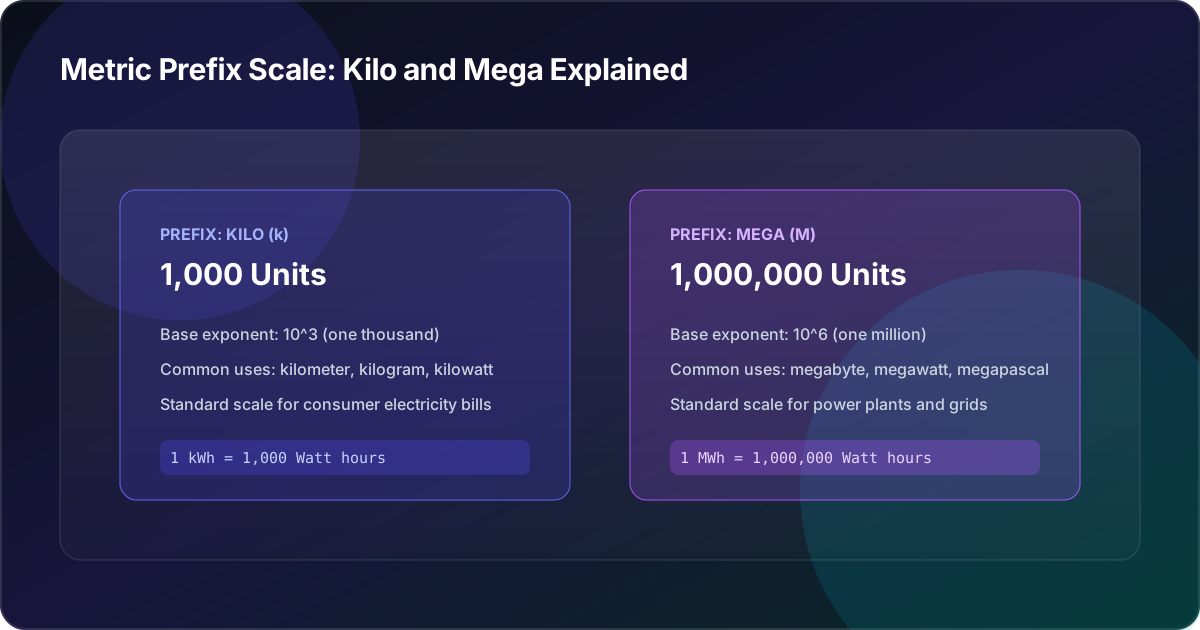
Numbers like 1,000 appear constantly in electricity measurement, but few people stop to ask why. Understanding why MWh equals 1000 kWh requires a quick look at the metric system itself. This guide explains the logic behind this important number and shows why getting it right truly matters.
The Metric Prefix System
Electricity units rely heavily on the metric prefix system, which uses standardized terms to represent different scales. This system keeps measurements consistent across science, engineering, and everyday life.
Each prefix, including kilo and mega, has an exact defined value. This structure is what makes metric conversion so reliable and predictable across every unit, not just electricity.
What “Kilo” Means
The prefix “kilo” always represents one thousand. This is true whether you are talking about kilometers, kilograms, or kilowatt-hours. The kilo meaning never changes, no matter the field it is applied to.
This consistency is part of why the metric system is used worldwide. Once you understand kilo equals 1,000, you can apply that same logic to nearly any measurement you encounter.
What “Mega” Means
The prefix “mega” represents one million. This is a much bigger jump than kilo, and understanding the mega meaning is essential to correctly performing any MWh-related calculation.
Since mega equals one million and kilo equals one thousand, the relationship between them becomes clear once you compare the two numbers directly.
Comparing Kilo With Mega
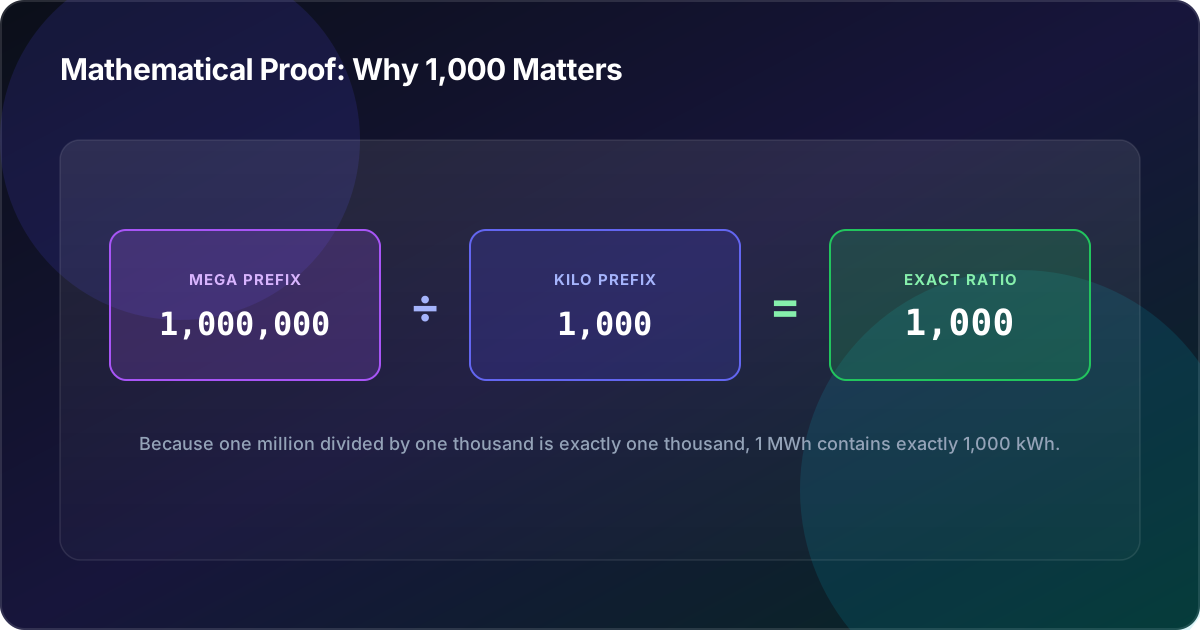
When you compare kilo versus mega, the difference becomes obvious. One million divided by one thousand equals exactly 1,000. This simple math is the entire foundation of the MWh to kWh relationship.
This comparison explains why megawatt-hours are always 1,000 times larger than kilowatt-hours, without needing any complicated formulas or unfamiliar rules.
Deriving the 1,000 Conversion Factor
The 1000 conversion factor comes directly from dividing mega by kilo. Since mega equals 1,000,000 and kilo equals 1,000, dividing these numbers gives exactly 1,000.
This derivation shows that the conversion factor is not arbitrary. It comes from a logical, consistent system used across nearly every scientific and engineering field.
| Prefix | Value |
|---|---|
| Kilo | 1,000 |
| Mega | 1,000,000 |
| Mega ÷ Kilo | 1,000 |
Why the Unit Gets Smaller
As you move from MWh to kWh, the unit itself becomes smaller, even though the total energy amount stays exactly the same. This is a key part of understanding unit scaling.
Smaller units naturally require larger numbers to represent the same amount of energy, which explains why kWh values are always 1,000 times bigger than their MWh equivalents.
Avoiding a 100 or 10,000 Error
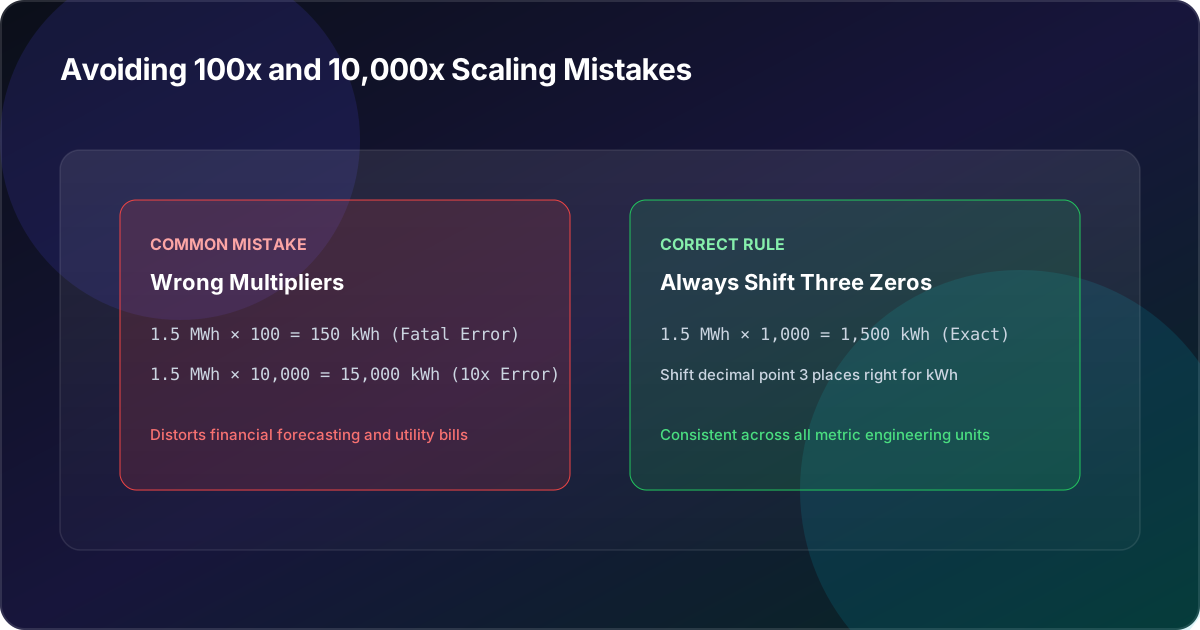
One of the most common mistakes is multiplying by the wrong number, such as 100 or 10,000 instead of 1,000. This error can significantly distort your final result.
To avoid this, always remember that the energy multiplier between MWh and kWh is exactly 1,000, based directly on the difference between kilo and mega prefixes.
Recognizing Incorrect Conversion Results
If your converted kWh number does not end in three extra zeros compared to your original MWh figure, something has likely gone wrong. This quick check helps catch MWh conversion mistakes early.
Recognizing these warning signs saves time and prevents inaccurate data from being used in reports, bills, or calculations.
Applying the Same Logic to Other Metric Units
This same kilo-to-mega logic applies across many other measurements too, not just electricity. Kilograms to megagrams, kilometers to megameters, and similar conversions all follow the same 1,000 multiplier rule.
Understanding this broader pattern makes it easier to apply conversion logic confidently to new units you may encounter in science, engineering, or everyday life.
Conclusion
The number 1,000 is not random. It comes directly from the defined relationship between the kilo and mega prefixes within the metric system. Once you understand this foundation, the entire MWh kWh 1000 explained concept becomes simple and logical. This knowledge protects you from common mistakes and builds a stronger overall understanding of how electricity measurement really works.